
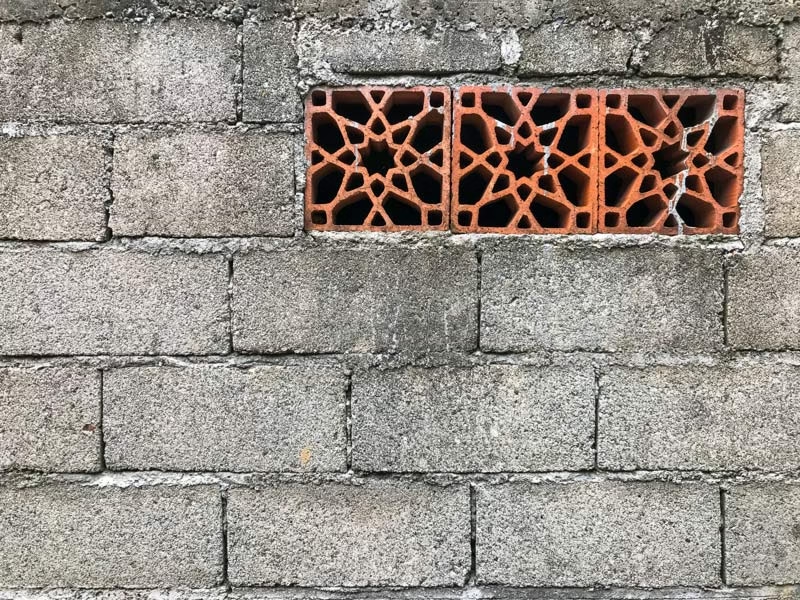
Air bricks are a small, but essential building block of any masonry construction project, and should be amongst the first deliveries to site once the foundation works are complete. Air bricks ensure proper ventilation to sub-floor areas, stopping moisture build-up, and keeping structures dry.
Whether your building has a suspended timber, or beam and block floor, air bricks should be installed at regular intervals below the damp proof course right around the perimeter. In older homes the air bricks can sometimes become blocked or covered over by later works, such as patio laying or pathways.
Here’s our guide to ensuring your build is compliant, and remains so.
Air bricks are essential for regulating air flow and maintaining an even temperature in below ground areas. Clay, or plastic air bricks can prevent moisture building up and causing problems with damp, rot and the spread of mildew.
They can be used as part of a condensation prevention strategy in garages, and other unheated domestic spaces.
Air bricks will be part of the plan to prevent the build-up of Radon gas in certain areas, and other gases that may need to be managed on brownfield or otherwise remediated sites.
Condensation can lead to structural damage over time too, whether your floor is of a suspended timber, or beam and block construction.
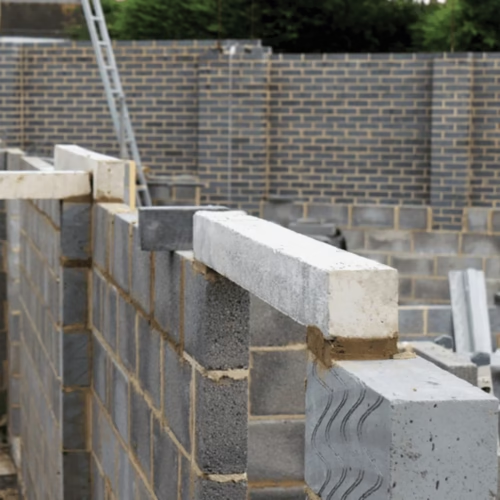
I would recommend that you order your air bricks at the same time as planning delivery of below ground block and brickwork. They are part and parcel of the below DPC stage of construction.
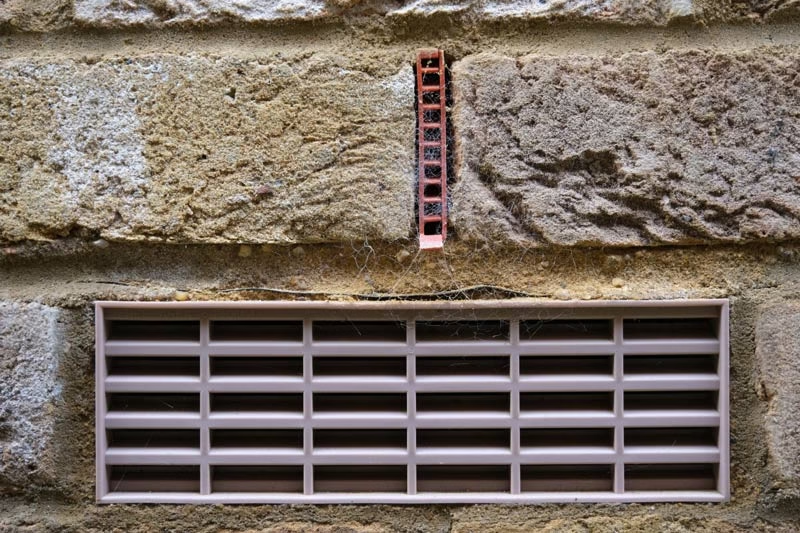
Traditional air bricks are made the same way as regular bricks, from clay, and fired in a kiln. In some conservation areas, or if your building is listed, you may need to make sure that the air bricks you want to use comply with regulations.

The Timloc Plastic Air Bricks are high-quality, durable ventilation solutions designed to provide efficient airflow in your home or building. Made from robust, weather-resistant…
The number of air bricks required is pretty simple to work out, and there are guidelines provided by both the NHBC and Building Regulations (Part C) to help. For timber floors you should expect to fit ventilation at least every two metres, and 450mm from the end of any wall.
The NHBC expressly recommends a minimum vented opening of 1500mm2 per metre of external wall, or 500mm2 for every square metre of floor area.
Plastic air bricks are extremely efficient for their size, and inexpensive too, so fitting one every two metres in a standard construction project will likely be adequate to meet air brick regulations.
For example: In an extension that is 4m wide and 3m deep you would need 2 air bricks at each end and three along the rear, making 7 in total, which is more than adequate.
I would always ensure that any air bricks are not installed within 400mm of a rainwater downpipe. Downpipes can become blocked and discharge large amounts of water during heavy rainfall that could directly impact an air brick and lead to flooding under the subfloor.
Air bricks should be installed at least 75mm above ground level, ideally where the ground is graded with a fall away from the building.
The NHBC recommendation of a minimum 2m between airbricks means that as a rule of thumb, if you fit an air brick every 8 bricks you will be well within the requirements.
If your project is in heavy, wet ground, in an area known for its high water table, or spring activity, you may require more robust anti-moisture preventive measures. If in doubt, always consult an engineer, or local surveyor who will be able to advise.
Air bricks can help to alleviate a moisture and damp problem in any building with a suspended floor construction. Over time, some may have failed, or become blocked by plants or other works.
Simply chisel out an existing solid brick and fit an air brick. The Timloc air brick fits into a standard brick course and is robust enough to not require a lintel or other additional support.
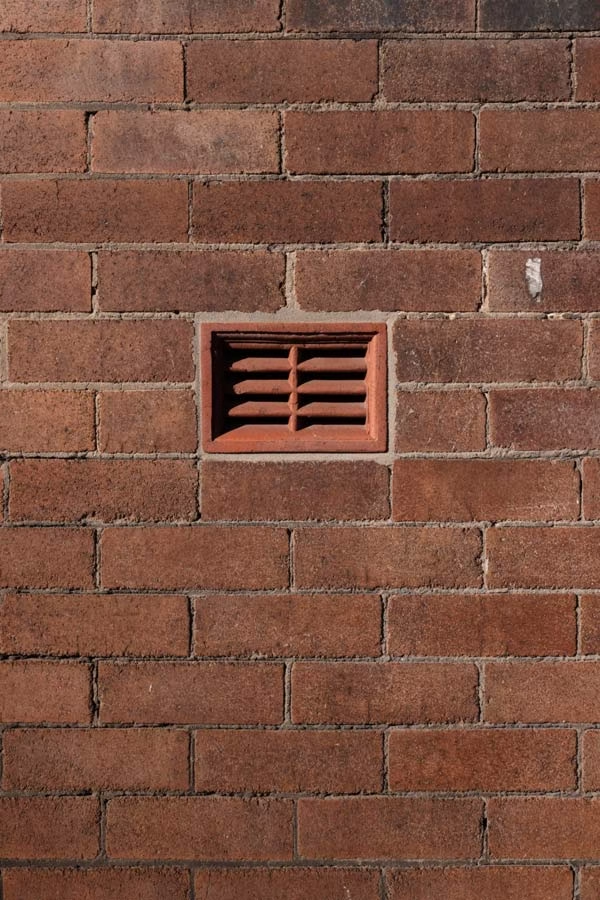
Air bricks that are functioning properly will direct fresh air through a timber subfloor to keep it dry. This can, in turn, lead to drafts through uninsulated timber floors.
There are three ways that this can be sorted out;
Avoid fitting air bricks behind steps, or other solid construction that may be required for access to a patio, path, or other paved area. Focus instead on having good cross ventilation, vents on opposites sides of the building, to maximise air flow.
Failed air bricks, blocked by plant action, ground disturbance, or other build-up such as the laying of a patio, or poor construction of an extension, will contribute to a damp problem within an older building.
Airways for sub-floor areas should always remain unrestricted, and where the blocking up of air bricks may be unavoidable, then other means of ventilation should be used, i.e. telescopic sleeves to reach the outer leaf if the position has changed.
Call us on 01902 366620 or email us today, for expert advice from industry specialists at Gilmore Building Supplies.