


Nearly 1 in 3 cavity-wall homes in Great Britain still have no insulation. That’s around 6.2 million properties left exposed as of the end of 2024.
Source: UK Department for Energy Security & Net Zero (DESNZ), 2024.
Cavity wall insulation is a requirement under UK Building Regulations for all new construction work, with few exceptions. But is it worth the time, expense, and trouble required to retrofit existing buildings?
Building Control will want to see evidence of cavity wall insulation compliance for your new extension, or garage conversion, but there’s no requirement to fit it to existing, previously built cavity walls.
This may leave the rest of the property without cavity wall insulation. Is this a problem?
Does Cavity Wall Insulation Matter?
The UK Building Regulations have been updated over the years in order to optimise the levels of insulation that go into new construction. Cavity wall insulation matters, as without it, heating and cooling bills will be higher.
Part L of the UK Building Regs sets out exactly what is required for all new construction work.
What Does Cavity Wall Insulation Do?
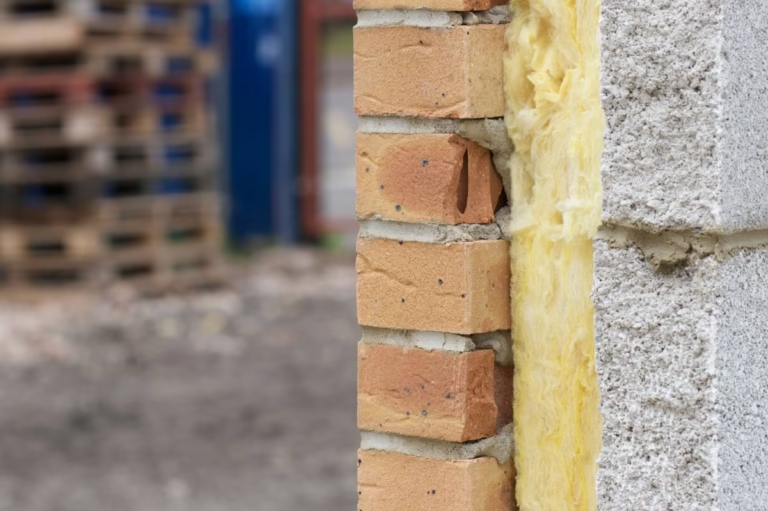
Cavity wall insulation is an essential part of your home’s thermal envelope, the continuous wrap-around strategy that eliminates cold spots, cold-bridging, and condensation issues.
According to the Energy Saving Trust 33% of heat is lost through uninsulated walls. If installing cavity wall insulation is combined with upgrading the condition of the walls, gutters and drainage, it can make a huge difference to drafts and damp too.
How Do I Know Whether I Have Cavity Walls?
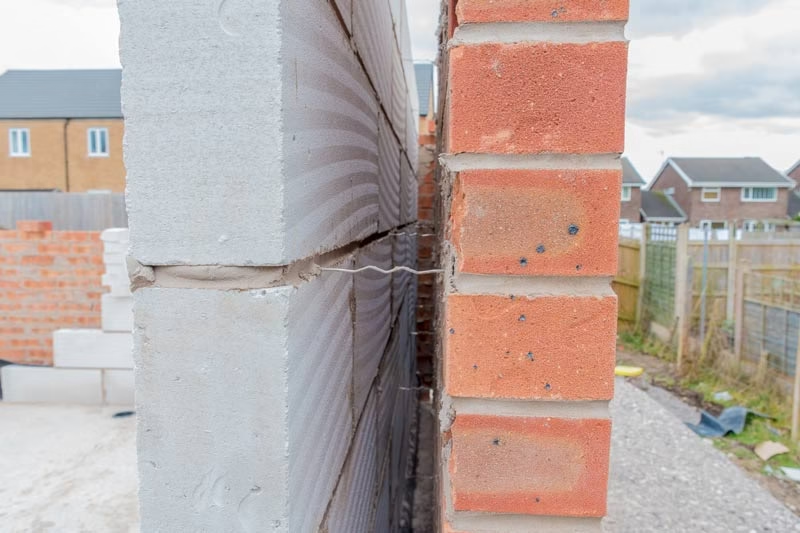
The easy way to tell if your brick built home has cavity walls is to check out the brick bond pattern on the outside of the house. The rule of thumb is that if your walls have a nice even pattern with all of the bricks laid lengthways, then you likely have a cavity wall.
For houses built after 1990 it is almost certain that your home was built with insulation in the cavity wall. This doesn’t mean that it can’t be added to!
What if I Don’t Have Cavity Walls?
Don’t despair, you can still insulate your solid walls either by adding insulation to the outside of the building, or to the inside by constructing either a metal or timber stud wall.
Chances are that your property will be an older dwelling, so will likely require a survey and assessment by a surveyor or other expert.
Can I DIY Fit Cavity Wall Insulation?
If you are putting up your own extension, then installing cavity wall insulation is pretty straightforward.
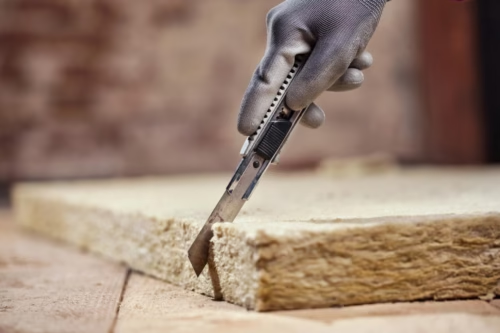
Fitting insulation board is easy, and has a tongue and groove edging joint that helps to provide continuous insulation with no gaps.
Insulation board is a great choice when you are working with a narrow cavity as it has a high level of thermal resistance.
Mineral wool insulation works well at moderating moisture, mould won’t grow on it, and it is incredibly fire resistant.
When working on a new project it is great to use, light and easy to fit as you go. It dries out quickly if exposed to moisture and is designed to fit snugly in the cavity.
DIY Retrofitting Cavity Wall Insulation
There are a couple of good choices for retrofitting cavity wall insulation, using insulating liquid foam, or blown fibre. Both have advantages and disadvantages, and it may come down to availability of equipment for hire.
Make sure you have clear access to the eaves in your loft so you can see the top of the cavity wall. From here, you can top up blown fibre, or spot foam when it expands out of the cavity.
Remember that you must maintain ventilation to the structural timbers of your roof to prevent condensation, rot and damp.
Professional Cavity Wall Insulation
The benefit of using a professional insulation installation company is that you will be paying for their experience. A firm will have the tools, equipment and product required to carry out the work in the most efficient way.
The work will also be underwritten with a warranty and be compliant with all legislation and manufacturer’s guarantees.
Blown Wood Fibre Insulation
Blown wood fibre cavity wall insulation scores highly for eco-friendliness as it is made from recycled paper and cardboard packaging. It’s treated to make it fire retardant, and insect repellent. Basically, it tastes nasty so you won’t be inviting pests into your home.
Foam Cavity Insulation
Foam has been used to retrofit cavity walls for decades. You can hire the equipment and DIY install. Don’t skimp on the holes required to pump the material in, and be mindful of any vents for sub-floor airflow.
The Problems With Cavity Wall Insulation
Sometimes cavity wall insulation is not the best way to address energy conservation in a home. Here are some things you may have to take into account:
- If you live in a terraced late-Victorian house, the cavity may be open to your neighbours on both sides.
- Air vents must be kept clear for under-floor ventilation. Be sure to sleeve them properly prior to starting work.
- Debris may block an older cavity, or bridge the gap between the inner and outer leaf.
- Blown insulation may settle over time, compact down and leave a gap at the top of the wall.
- Properties built before 1875 may not have been built with cavity wall construction.
If your home is a listed building, or has to conform to conservation area regulations, you may need to take professional advice. At the very least, any making good to mortar, render or other external finishes will have to be taken into account.
Next Steps With Cavity Wall Insulation
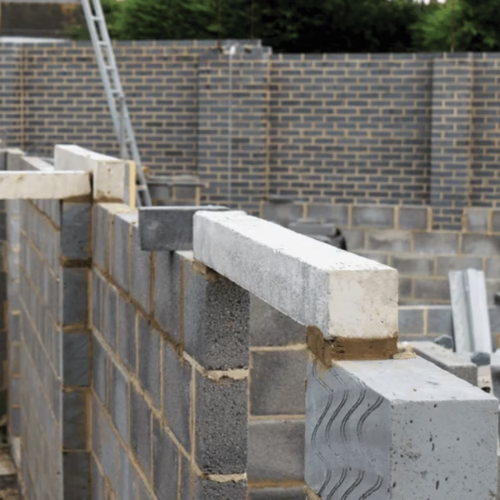
Your extension, or other new build project will have to pass a certain level of compliance when it comes to energy conservation. Choosing thermally efficient blocks can help deliver what is required as part of an overall strategy.
Gilmore has been supporting builders, contractors and the public for many years. As legislation changes and regulations are tightened we make sure we have what you need to comply, save time, save energy and save money.
Get in Touch!
Call us on 01902 366620 or email us today, for expert advice from industry specialists at Gilmore Building Supplies. Find out how we can help you hit your energy efficiency targets today.