


Loft insulation needs to fit properly to be effective, which often means cutting it to size. Different types of insulation require different tools and techniques, so which is best for your specification?
It doesn’t matter whether you are using rolls, batts, or boards, there are common issues to all specifications of loft insulation. Remember to keep your tools sharp, and to light the working area as well as possible.
Here’s what to do to prepare for your loft insulation project.
How to Cut Fibreglass or Mineral Wool Rolls
Fibreglass, or mineral wool is a popular, economic choice, good for topping up existing insulation, and quick to install. The great thing about these products is that they come pre-cut to fit 400mm or 600mm centres.
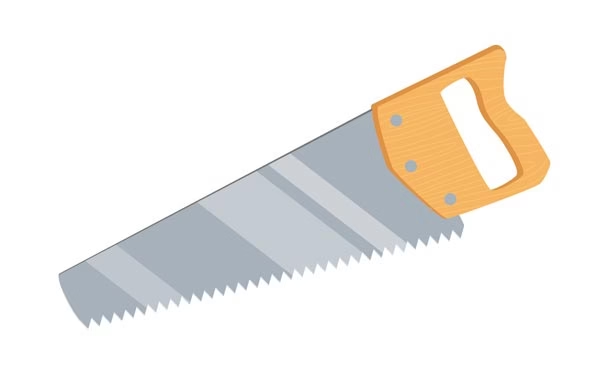
Whichever they are, I’d cut them to width while they’re still in the wrapper using a standard carpenter’s hardpoint saw. If it’s not in a wrapper, use a serrated knife (ideally a knife designed to cut insulation) such as a bread knife if that’s all you have. Free the narrower rolls up in the loft and cut to length in situ.

How to Cut Wood Fibre or Mineral Wool Batts
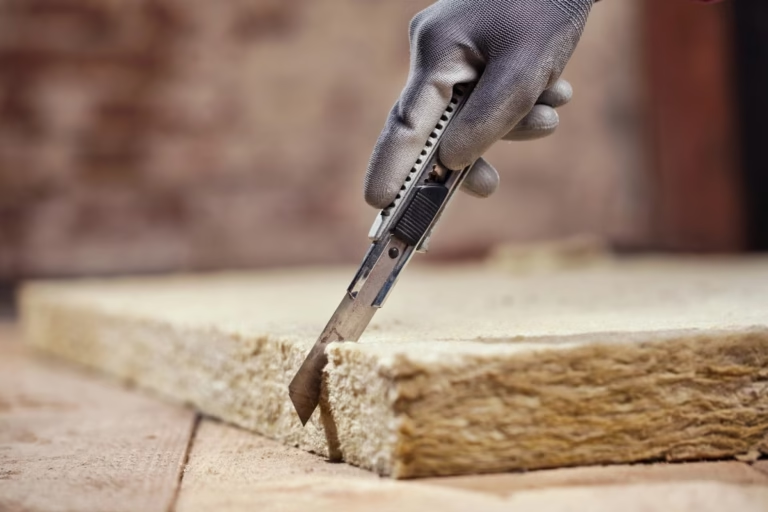
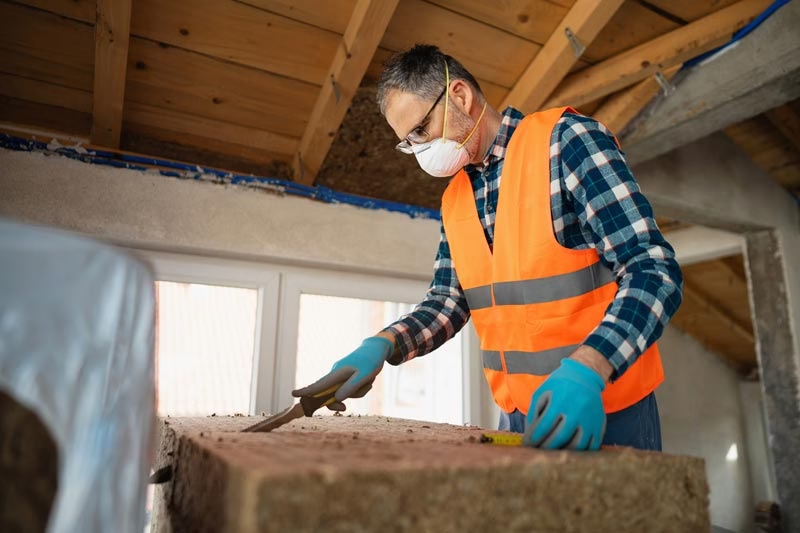
Wood fibre or mineral wool batts are great for fire protection and noise reduction, which is perfect for town and city living, subdividing a property, or party walls. They come in standard sizes, usually 600mm by 1200mm. Wood fibre is often less rigid than mineral wool, so cut once on both sides with a craft knife to ensure a neat finish.
Mineral wool batts cut well with a circular saw, using a wood blade, but it has to be used with an effective dust extraction kit.
How to Cut PIR Foam Board Insulation
PIR (Celotex) foam board will help with airtightness and has the highest insulating value per inch, so perfect for challenging, or tight spaces. Most boards come with marks printed on the foil showing 400mm or 600mm centres to help with sizing.
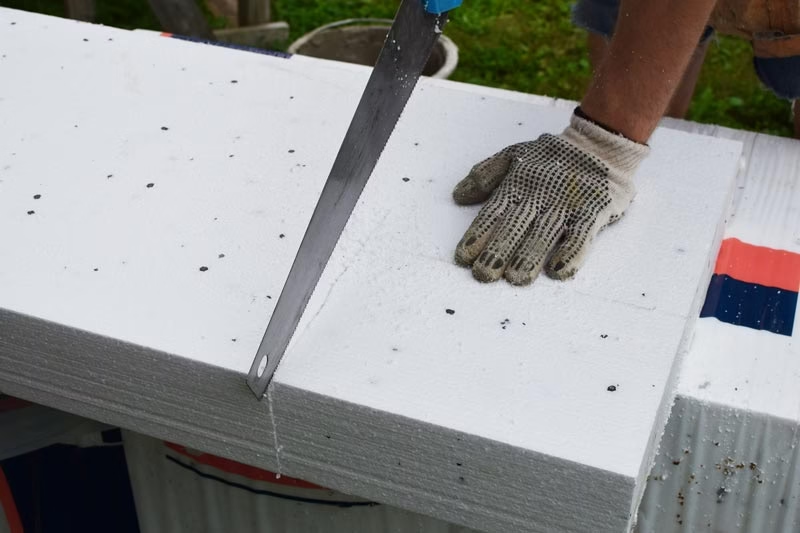
Polystyrene also comes under this classification and is easy to cut with a regular saw, but be prepared for a massive clean-up job as the poly beads stick to everything while also spreading everywhere.
What Tools do you Need to Cut Loft Insulation?
- A sharp craft knife will cope with most situations, but for mineral wool or fibreglass, a large pair of scissors is the safer, and easiest way to cut.
- For standard 240mm rolls a double pass with a pair of scissors will be a reliably accurate way to make the cut.

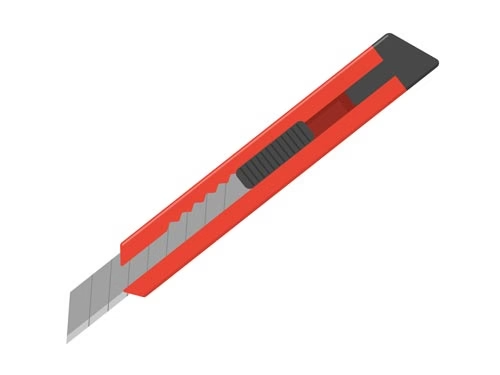
- For 25mm PIR board, a craft knife is ideal. For anything thicker, I would use a standard hardpoint carpenter’s saw.
- I might still use the knife to mark out the saw cut, that way it reduces wear and tear on the saw teeth and leaves a neat edge.
- Wood fibre batts need to be cut slightly over size in order to get a good friction fit tight between the timbers.
- Always use a saw and cut the batts 10mm over the largest gap. Rockwool insulation doesn’t mind a little bit of compression.
- Multifoil, quilted metal foil insulation has become increasingly popular for protecting outbuildings and garages.
- It is incredibly tough and resists everything except a domestic electric carving knife, which has twin blades moving next to each other, resisting clogging and making for a nice neat cut. Use it for the Sunday roast when you’re done!
- A marker pen is perfect for cutting most loft insulation as it is easy to see, and the cuts don’t have to be too precise.
- Wool can be compressed, then fluffed up to fill a space. Remember, it’s the air gaps that do the insulating, so try not to crush it too much.
PPE: What Personal Protective Equipment Do You Need to Cut Loft Insulation?
Insulation technology has advanced in recent years, from wood fibre to mineral wool you can expect the material to be very safe to use. However, cutting loft insulation can have hazards such as dust and airborne particles which can irritate the respiratory system.
Before you start make sure that you have an FP3 mask to protect your throat and lungs. Lofts are naturally dusty environments and any construction activity will give rise to airborne particles.
I’d use cut level 4 gloves to protect your hands from minor abrasions, but the most effective way to prevent injury is to keep your hands behind the blade. Always cut away from the body with a craft knife, and never force, or use excessive pressure on a knife, or saw handle.
Best Practise:
Always be mindful of the surface on which you are cutting. A plywood board or a section of 18mm chipboard flooring that you may be using for the loft floor, is an ideal surface to cut against. The loft hides lots of services and electrical cables for the lighting are perhaps the most hazardous!
Loft Access.
Rolls are usually easy to lift through the hatch, whereas batts and boards often require at least a 600mm gap. If you were planning on making your cuts at the workface, in the loft space, you may have to consider the possibility that you will have to do the cutting work down below!
This may not be such a bad thing, as lofts can be cramped, awkward spaces to navigate. In a hallway, or landing, there will be more room to move, just ensure that any mess you make will be properly contained and easy to clean up!
Best Practice:
How much insulation is too much? Loft insulation is an essential tool in the battle to save energy and lower bills, but it doesn’t mean stuffing every nook and cranny. Be sure to leave a 50mm gap at the eaves to deliver good air circulation to the uninsulated portion of the roof structure to avoid condensation and mould.
Get in Touch
The Gilmore team are specialists in building supplies and can help you with specifications, delivery, and any other query you might have. Contact us by email today or call on 01902 366620 to discuss your requirements.